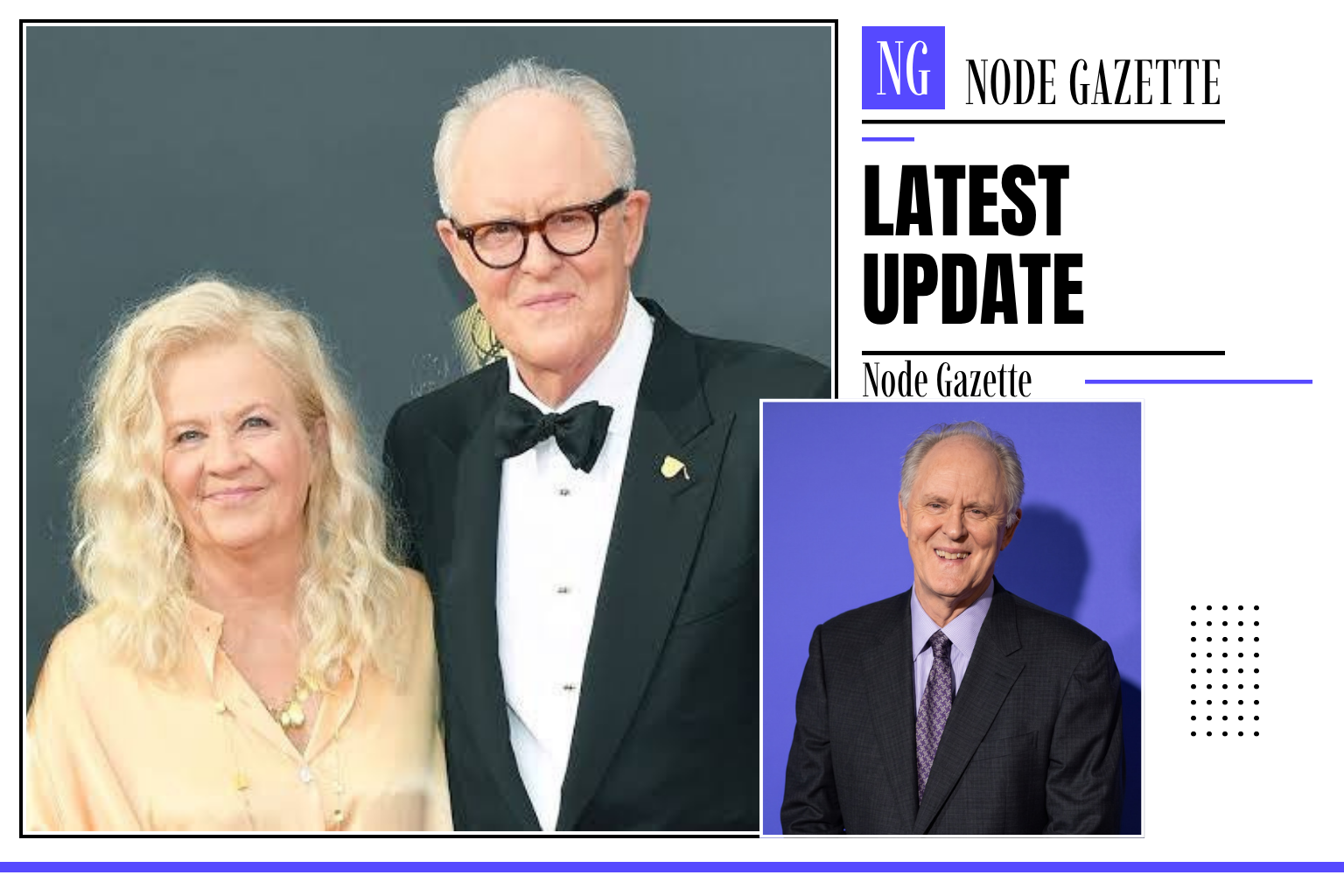
Jean Taynton is best known publicly as a teacher and the first wife of actor John Lithgow. Their marriage began in the 1960s, before Lithgow became a familiar figure in film, television, and theatre, and they had one son, Ian Lithgow.
Jean Taynton has not maintained a public profile comparable to her former husband’s, so many details about her early life and later years remain uncertain. The most reliable biography is one that sets out the known facts and avoids turning gaps in the record into speculation.
Jean Taynton: Quick Information
| Name | Jean Taynton |
| Profession | Teacher |
| Known for | John Lithgow’s first wife |
| Former spouse | John Lithgow |
| Child | Ian Lithgow |
| Marriage | 1966–1980 |
| Public profile | Private individual; limited verified details |
Jean Taynton: Early life and education
The public record about Jean Taynton’s early life is sparse. Biographical references identify her as a teacher, and some archival references connect her with Oberlin College, but there is not enough widely available evidence to establish a complete account of her childhood, birth date, family, or education.
Online biographies sometimes add details that are difficult to verify independently, so they should not be treated as settled facts without stronger documentation.
Her profession is nevertheless important. Teaching is a career with its own responsibilities, skills, and impact, even when it does not generate celebrity coverage.
Jean Taynton’s public identity is often reduced to a relationship with a well-known actor, but the available description of her as an educator points to a life with a professional role separate from Hollywood.
Marriage to John Lithgow
Jean Taynton married John Lithgow in 1966. Lithgow was then building his career as a stage performer and later became known for an unusually wide range of roles in theatre, film, and television.
Their marriage began at a formative point in his working life, before many of the awards and major screen appearances that would later define his public profile.
A marriage during an emerging career can involve moves, financial uncertainty, long working hours, and changing ambitions. Those are general realities rather than documented claims about Taynton’s particular household, so they should not be used to invent a domestic narrative.
What is established is the timing of the marriage and the fact that their family life overlapped with Lithgow’s development as an actor.
Jean Taynton: Their son, Ian Lithgow
Jean Taynton and John Lithgow had one son, Ian Lithgow, who later also worked as an actor. Ian appeared in projects including television work and has occasionally been mentioned in profiles of his father. The family connection is one of the most visible elements of Taynton’s public biography.
The fact that both father and son entered acting does not mean that Jean Taynton herself was involved in the entertainment industry. It does show how the family story continued into a later generation.
Details about Ian’s childhood and the family’s private arrangements are not necessary to explain Jean Taynton’s role as his mother and should not be expanded without direct, reliable sources.
Divorce and the end of the marriage
Taynton and Lithgow divorced in 1980. Biographical accounts link the end of the marriage to Lithgow’s relationship with actress Liv Ullmann, which became a widely discussed episode in his personal history. Because the details concern other people’s private lives, a careful article should avoid sensational language and keep the focus on the verified chronology.
The divorce did not make Taynton a public figure in her own right. Afterward, she remained comparatively private, while Lithgow’s professional profile continued to grow.
The difference in public visibility can lead readers to assume that the spouse who appears less often in interviews has little story of their own. In reality, it means the available evidence is limited, not that her life can be reduced to the marriage.
Jean Taynton: A teacher beyond a celebrity connection
Jean Taynton’s career as a teacher is a significant part of the small public record. Some newer online profiles make specific claims about her teaching particular groups of students, but those claims are not consistently supported by authoritative sources.
Unless a reliable record confirms a specific institution or specialty, it is better to describe her profession broadly rather than attribute unverified accomplishments to her.
Teaching is also a useful reminder of the difference between public fame and social contribution. Educators can have meaningful careers without media coverage or searchable biographies. A responsible profile should not imply that celebrity status is the only measure of a life’s importance.
Why Jean Taynton remains a search topic
Interest in Taynton largely comes from John Lithgow’s long career and the curiosity surrounding his first marriage. Readers may also want to know about Ian Lithgow and the family’s timeline. These are legitimate questions, but many internet pages repeat the same small number of facts and add unsupported personal details to appear comprehensive.
The most useful account is transparent about what can be established: Taynton was a teacher, she married Lithgow in 1966, they had a son, and they divorced in 1980. More detailed claims about her birth, finances, or present-day life require stronger evidence.
Jean Taynton: Privacy and a balanced portrait
Jean Taynton’s life illustrates a common challenge in writing about people connected to celebrities. Public sources often preserve the dates and relationships that matter to a famous person’s biography, but not the full experiences of their relatives. It would be unfair to treat that partial record as permission to speculate.
Jean Taynton can be recognized as an educator, a mother, and an important part of John Lithgow’s early family history without exaggeration. The best biography gives readers the context they came for, clearly marks uncertainty, and respects the fact that a private person does not owe the public a complete account of her life.
Additional context for readers
The period in which Taynton and Lithgow married was a time of change in American theatre and film. Actors increasingly moved between stage work, television, and cinema, and careers could take years to stabilize.
Lithgow later became known for roles across genres, from comedy to drama, but those later accomplishments should not be projected backward as if his future success were guaranteed in 1966. The marriage belongs to an earlier chapter of his life, when both partners were building their adult lives.
Teaching also has a professional history that can be overlooked in celebrity profiles. Educators work within schools and communities, support students’ development, and often have careers that are not documented in entertainment databases.
The fact that Taynton’s teaching record is not fully represented online does not make the work unimportant. It simply means that the available sources were created mainly to document Lithgow’s career, not to preserve a comprehensive biography of his former spouse.
Readers should be wary of biographies that state a precise birth date, net worth, or highly detailed teaching story without citing a dependable record. Those facts are repeated widely online, but repetition alone is not proof.
A reliable article can be useful without pretending to know everything: it can identify Taynton as a teacher, explain her marriage and son, and acknowledge that the remainder of her life has largely stayed private.