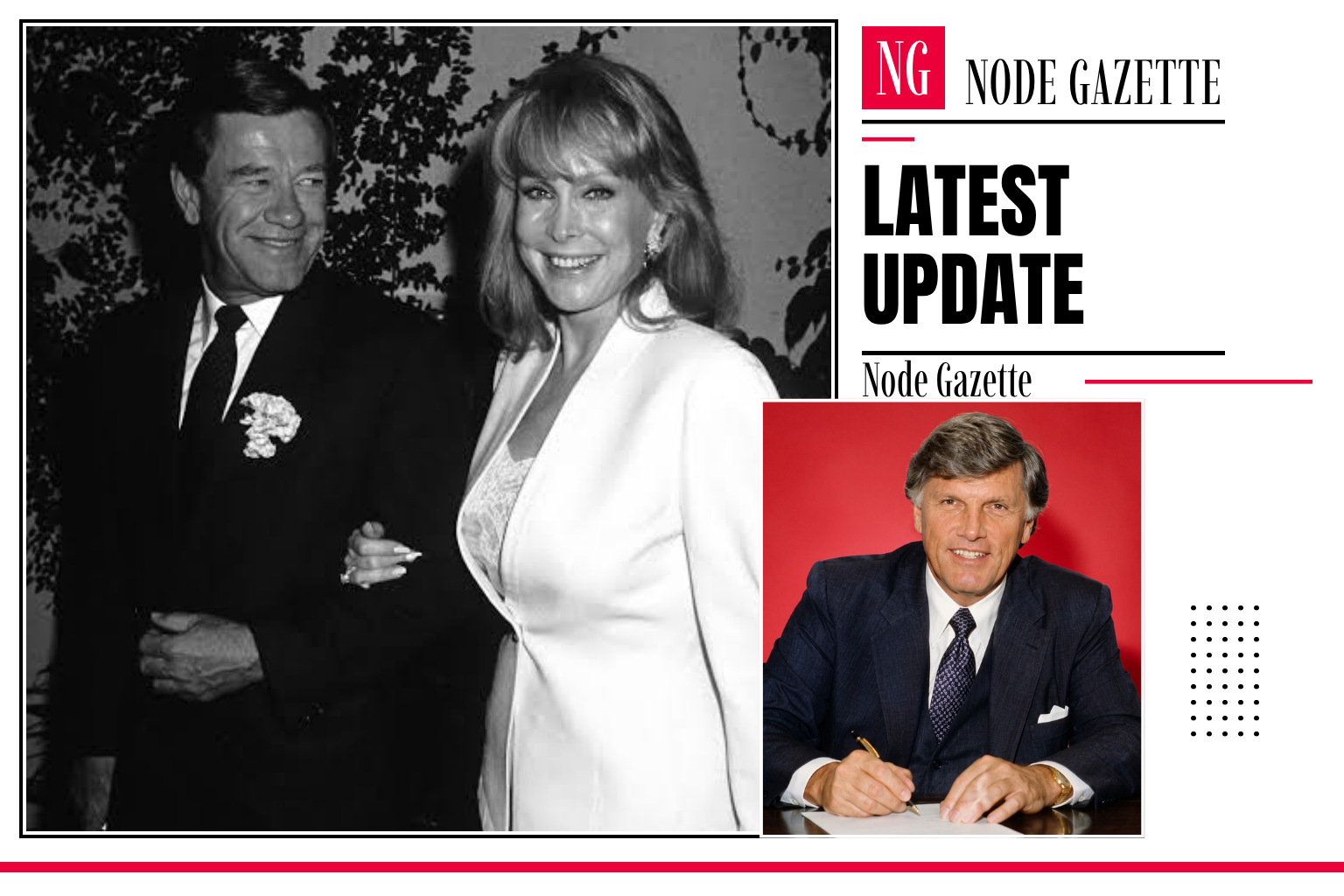
Charles Donald Fegert was a Chicago newspaper advertising executive whose name became familiar to entertainment readers through his marriage to actress Barbara Eden. Eden is best known for playing Jeannie in the television comedy I Dream of Jeannie, but Fegert’s own career belonged to the business side of newspapers rather than acting. His professional history illustrates the importance of advertising to major city newspapers during the twentieth century, while his marriage brought a private business executive into public celebrity coverage.
Quick Information
Full name: Charles Donald Fegert
Profession: Newspaper advertising and marketing executive
Industry: Chicago newspaper publishing
Known for: Marriage to actress Barbara Eden
Marriage: 1977
Divorce: Commonly recorded as 1983
Public record: Career details are clearer than many personal details
Who Was Charles Donald Fegert?
Charles Donald Fegert worked in newspaper advertising and management in Chicago. He was not an actor or television personality, and most public interest in his private life grew after he married Barbara Eden. Before that marriage, his professional work placed him in the commercial operations of major newspapers, where advertising sales were central to the financial health of the publication.
Newspapers historically depended on advertising revenue alongside circulation income. Large city papers maintained teams that sold space to retailers, national brands, and local businesses. Senior advertising managers had to understand the needs of clients, the paper’s readership, pricing, sales strategy, and the relationship between commercial goals and editorial independence. Fegert’s professional identity belongs to this business environment.
Career in Chicago Newspapers
Public records and historical references associate Fegert with senior advertising responsibilities at the Chicago Sun-Times and Chicago Daily News. These roles placed him in an important part of the newspaper industry at a time when print remained a dominant source of local and national information. Advertising executives helped coordinate sales teams, negotiate campaigns, and develop relationships with companies seeking to reach urban audiences.
The work required a mixture of commercial judgement and management. Advertising staff needed to understand the paper’s audience and explain why a particular campaign would be effective. They also had to operate within deadlines and changing market conditions. As television grew and media competition intensified, newspapers had to defend their value to advertisers. A senior executive in this environment would have worked within a changing commercial landscape, even though the details of every project Charles Donald Fegert managed are not publicly available.
Meeting Barbara Eden and Their Marriage
Charles Donald Fegert became more widely known after marrying Barbara Eden on September 3, 1977. Eden had achieved television fame as the star of I Dream of Jeannie, which aired from 1965 to 1970 and remained popular through reruns. Their marriage connected two very different professional worlds: Chicago newspaper management and Hollywood entertainment.
The marriage attracted press attention because Eden was a familiar television star. Yet public recognition of the couple does not mean that every detail of their relationship is independently documented. Accounts of the marriage’s private dynamics are largely drawn from Eden’s own later recollections. When discussing those experiences, it is important to distinguish a first-person account from an independently established legal finding. That distinction allows the article to acknowledge her published perspective without presenting all private events as matters confirmed by outside records.
The Relationship’s End
Biographical references commonly record that Eden and Charles Donald Fegert divorced in 1983, although some accounts describe the relationship as having effectively ended earlier. This difference can arise because separation and legal divorce are distinct events. A clear timeline should therefore avoid implying that every source uses the same date for the end of the relationship.
Eden later married real-estate developer Jon Eicholtz in 1991. Fegert, meanwhile, did not remain a regular subject of entertainment coverage. Once the marriage ended, public interest in him diminished, and the record becomes less detailed. It is not responsible to fill that gap with unverified claims about his later relationships, finances, residence, or personal habits.
Barbara Eden’s Public Account
Eden discussed her second marriage in her memoir Jeannie Out of the Bottle. Her account includes difficult experiences, and descriptions of the relationship in the memoir have shaped how later profiles portray Fegert. Since the more detailed account comes from Eden, it should be attributed to her rather than presented as if a neutral investigation established every element independently.
This is a general principle for biographies involving allegations or painful relationships. A person’s first-person testimony is important evidence about their experience, but writers should identify whose account is being described and avoid embellishing it. Charles Donald Fegert did not leave a comparable widely circulated public memoir, so there is an imbalance in the surviving record. The absence of his account does not justify inventing one or dismissing Eden’s; it calls for careful attribution.
Newspaper Advertising in Historical Context
Fegert’s career is also interesting because it reflects a period when newspapers were powerful commercial institutions. City newspapers were major sources of advertising for department stores, car dealers, entertainment venues, and national brands. Advertising executives were responsible for translating readership into value for clients while helping their organisations compete with rival papers and emerging broadcast media.
Over time, digital platforms changed how advertising was sold and measured. The print business relied heavily on circulation, readership estimates, and placement, while digital advertising introduced clicks, impressions, targeting, and real-time performance data. Fegert’s career predates much of this transformation, but it belongs to the long history of media businesses adapting to changes in technology and consumer behaviour.
What Is Known About His Later Life?
Compared with Barbara Eden, Charles Donald Fegert left a smaller public footprint. Many modern pages repeat claims about his birth year, net worth, or death without always showing clear documentation. A precise net-worth figure should not be treated as fact unless supported by reliable financial evidence, which is rarely available for a private executive. Likewise, biographical details should not be copied from websites that provide no traceable sourcing.
The reliable outline is that Charles Donald Fegert worked in Chicago newspaper advertising and married Eden in 1977; their marriage ended in divorce, commonly dated to 1983. Beyond this, publicly accessible information is less consistent. Recognising the limits of the record is preferable to making a detailed but unreliable narrative.
Advertising Before the Digital Era
Newspaper advertising was once a major part of the commercial infrastructure of cities. A local retailer could use a print advertisement to announce a sale, while national brands used newspaper pages to reach a broad readership. Advertising departments had to sell space, negotiate rates, maintain client relationships, and understand which sections and editions would reach the desired audience.
The business changed as television, cable, and eventually the internet gave advertisers more choices. Newspaper executives had to respond to shifts in readership and competition while maintaining a viable commercial model. Fegert’s work in Chicago newspaper advertising belongs to that history. Even without a complete list of his campaigns, his professional field provides context for the role he held and why it mattered to a major newspaper organisation.
Conclusion
Charles Donald Fegert’s public story combines a documented career in Chicago newspaper advertising with a marriage to television actress Barbara Eden. His professional life placed him in the commercial side of an influential media industry, while the marriage brought him brief celebrity attention. The most responsible biography separates career facts from accounts of private relationship experiences, attributes those accounts accurately, and avoids unsupported claims about his finances or later years. This provides readers with a clear picture without confusing speculation with established history.